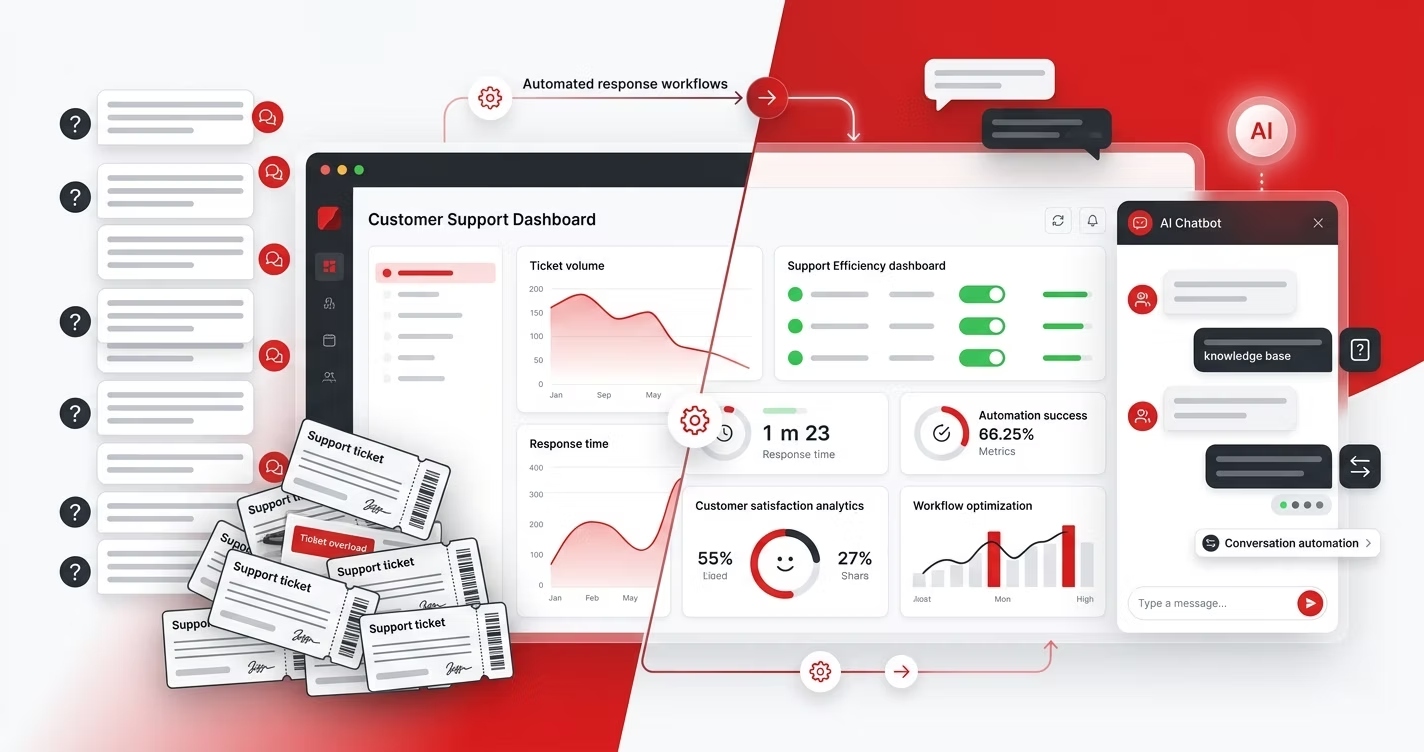
“What are your hours?” “Do you ship to my area?” “How much does it cost?” “Where’s my order?” A customer service chatbot exists for exactly this. If you or your team answer the same handful of questions all day, every day, you know how it eats your time. Each one is quick on its own, but together they swallow hours you could spend on work that actually grows the business.
The frustrating part is that customers aren’t being difficult — they just want fast answers. And when those answers come slowly, or after hours, you lose them. There’s a better way to handle the repetitive stuff without hiring more people or chaining yourself to the inbox. Let’s talk about it.
Why a Customer Service Chatbot Helps With Repeat Questions
It’s not that customers don’t read. It’s that people want an instant, direct answer rather than hunting through your site for it.
A small set of questions — hours, pricing, location, availability, order status — makes up the vast majority of what you field. They’re predictable and repetitive, which is exactly why they’re such a good candidate for automation. The information rarely changes; only the person asking does.
What All This Repetition Costs You
The cost is bigger than it feels in the moment.
If answering routine questions takes even an hour of your team’s day, that’s five hours a week — most of a full workday — spent on things a good system could handle instantly. Multiply that across a year and it’s real money. And every minute spent on “what are your hours” is a minute not spent on the work only a human can do.
There’s a customer cost too. A question that sits unanswered for hours — or overnight — is a customer who may quietly go elsewhere.
What a Real Customer Service Chatbot Solution Looks Like
An AI chatbot handles the predictable questions instantly, any time of day, and hands off the genuinely complex ones to a human.
Done well, it doesn’t feel robotic or frustrating. It answers the routine questions accurately in seconds, freeing your team for the conversations that actually need a person. Here’s what a good one does:
- Answers your most common questions instantly, 24/7.
- Knows your hours, pricing, policies, and basics cold.
- Passes anything tricky to a real person smoothly.
- Learns from real conversations to get better over time.
A well-built customer service chatbot for small business isn’t about replacing your team — it’s about freeing them from the repetitive 80% so they can focus on the 20% that matters.
Do You Actually Need One?
Be honest about your volume. If you get a handful of questions a week, a clear FAQ page might be all you need — no chatbot required, and that’s fine.
But if repetitive questions are genuinely eating hours, customers complain about slow replies, or you’re losing after-hours inquiries, a chatbot starts paying for itself fast. It’s the same logic as deciding when a website chatbot is worth it for capturing leads — it comes down to how much the manual approach is costing you.
FAQ
Will a chatbot annoy my customers?
A bad one will. A well-built one answers fast and hands off to a human when needed, which most customers actually prefer to waiting.
Can it handle questions specific to my business?
Yes. A good chatbot is trained on your hours, pricing, policies, and products — not generic answers.
What happens with questions it can’t answer?
It passes them to a real person, so customers never hit a dead end.
The Bottom Line
If your team answers the same questions all day, that repetition is quietly costing you hours and customers. A small set of predictable questions makes up most of your support load — and that’s exactly what a good chatbot handles instantly, while passing the tricky stuff to a human. The point isn’t replacing people; it’s freeing them for work that matters.
If you’re buried in repetitive questions, we’re happy to look at what you’re fielding and tell you honestly whether a chatbot would help or whether a better FAQ page would do. Let’s see what’s eating your time.
1 comment on “Your Team Is Drowning in the Same Customer Questions All Day”